Urgent help now? Call 999 · Beat: 0808 801 0677
ARFID

ARFID isn't fussy eating. And it isn't your fault.

Two children blow bubbles outdoors with their family on a sunny day

A recognised eating disorder with real causes — sensory sensitivity, fear after a bad experience, or little interest in food. Our carer-led programme helps you widen your child's world, one food at a time.

Built on proven interventions
Co-created with families in recovery
Trusted by NHS clinical teams
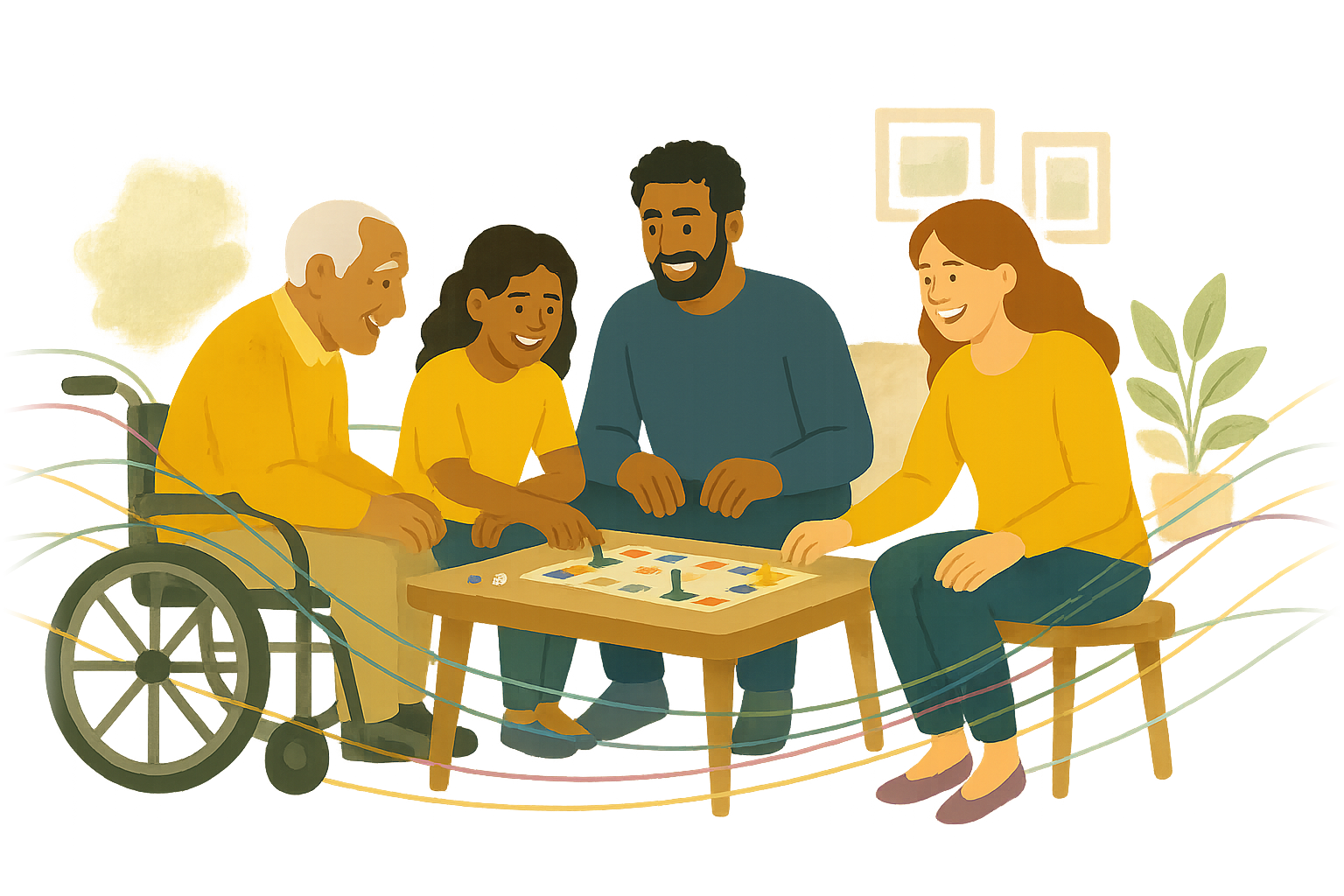
A family playing a board game together

Finally, a name for it

"She's just fussy." "He'll eat when he's hungry." You've tried everything — and known in your bones this was something more.

It is. ARFID — avoidant/restrictive food intake disorder — is a recognised condition. It has nothing to do with vanity, body image or attention.

It isn't caused by parenting. And your child isn't choosing it.

"

A lot of people don't understand and just think she's fussy because she wants attention.

— Parent of a child with ARFID

Three reasons, one child at a time

The avoidance usually traces to one or more of three drivers.

Sensory sensitivity

Certain textures, smells, temperatures or appearances feel genuinely unbearable — not disliked, unbearable. Common alongside autism and ADHD.

Fear of what might happen

After choking, vomiting or pain, eating can become frightening. The list of foods that feel safe gets shorter and shorter.

Low interest in eating

Some children rarely feel hunger the way others do. Eating feels like a chore, and a few mouthfuls feel like plenty.

The right next step for a sensory-avoidant child is the wrong one for a fearful child. That's why our programme starts with understanding, not pressure.

The gap families fall into

ARFID treatment isn't yet in national NICE guidelines, so services vary hugely. Families are passed between paediatrics, CAMHS, neurodevelopmental services and dietitians — or told their child doesn't fit anywhere.

nearly half

of all referrals in some NHS children's eating disorder services now relate to ARFID

We built our ARFID programme to close that gap: specialist, evidence-informed support you can start today, wherever you live — the same programme NHS services commission from us.

What you'll have in your pocket

Built by the clinicians who treat this, and the families who live it. It doesn't open by telling you what to do. It starts by working out what's actually driving your child's avoidance, then builds everything else around that answer.

Screenshot: needs-based assessment

Needs-based assessment

Pinpoints what drives avoidance — sensory, fear, low interest, or a mix of all three.

Screenshot: nutritional picture

Nutritional picture

Nutritional profile helping you understand any gaps to guide which foods to introduce.

Screenshot: food-exposure engine

Food-exposure engine

Playful experiments that adapt to your family's pace, week by week.

Screenshot: 10 week programme

10 week programme

Week by week new modules helping you gain new skills and knowledge to support your child.

A few of the things you'll find inside. Behind them sit dozens of modules and videos from families who’ve been there, and other tools to help you and your child.

Built around your child. Led by you.

A carer-led programme — your child doesn't need to sign up. A 10-week core that then moves at your pace.

A needs-based assessment first

Using PARDI-AR-Q, a structured ARFID interview, we pinpoint what drives your child's avoidance — sensory, fear, low interest, or a mix.

A food-exposure engine, at your child's pace

Playful, game-like food experiments matched to your child's profile. Progress is celebrated; pressure is banned. A nutrition picture updates as new foods come in.

Adapted for autism and ADHD

Designed with neurodevelopmental profiles in mind from the beginning — because strategies that work for a neurotypical child can backfire for an autistic one.

Carer skills throughout

The New Maudsley approach, translated for ARFID mealtimes: lowering anxiety, avoiding the pressure trap, and looking after your own reserves too.

See programme details and pricing

What progress looks like

Not a clean plate. Not overnight. Progress with ARFID looks like a new food touched, then licked, then tried. A calmer table. A birthday party attended. A child who trusts that no one will push.

Even the teeniest steps deserve celebration — and this programme is built to notice every one.

"

The app has helped in every aspect of life. You can focus on the app together during parts of the week that best fit in with his snack and meal routines.

— Mum of an autistic son with ARFID

You've been told it's nothing. It's something — and there's help.

Your child's world can get wider. Small steps, together.

Is this right for me?

What are you facing right now?

Our child avoids so many foods, and it's not about weight — ARFID, or something like it

ARFID care programme →

This programme is not yet available to buy.

We've seen a change — meals skipped, foods cut out, worries about weight or body — but there's no diagnosis
Our child has anorexia

Anorexia care programme →

Our loved one (over 18) is coming home after hospital

Returning home programme →

Still unsure? Book a free call and we'll help you choose.

Questions families ask

No. The programme supports children with a formal ARFID diagnosis and children with ARFID-like eating difficulties. The needs-based assessment at the start meets your child where they are.
Yes. The programme was designed with autistic children and children with ADHD in mind from the beginning, not adapted as an afterthought.
Yes — especially if your child is losing weight, not growing as expected, or very restricted in what they eat. Nutritional deficiencies need medical eyes. Univa works alongside your GP, not instead of them.
The ARFID programme is £35 per month. If an NHS healthcare professional registered you and you've received a Univa welcome email or text, it's free — your programme is already funded.
Two children blow bubbles outdoors with their family on a sunny day
ARFID

ARFID isn't fussy eating. And it isn't your fault.

Avoidant/restrictive food intake disorder is a recognised eating disorder with real causes — sensory sensitivity, fear after a bad experience, or little interest in food. Univa's carer-led programme helps you understand which is driving your child's eating, and widen their world one food, and one small win, at a time. Is this the right programme for me? →

Proud partners of the NHS

Built on proven interventions Co-created with families in recovery Trusted by NHS clinical teams
A family playing a board game together

Finally, a name for it

If you're here, you've probably heard it all. "She's just fussy." "He'll eat when he's hungry." "Have you tried hiding vegetables?" You've tried everything — and watched your child panic at a birthday buffet, or eat the same few foods for years, and known in your bones this was something more.

It is. ARFID — avoidant/restrictive food intake disorder — is a recognised condition in which a person avoids certain foods, restricts how much they eat, or both. It has nothing to do with vanity, body image or attention.

It isn't caused by parenting. And your child isn't choosing it.

"

A lot of people don't understand and just think she's fussy because she wants attention.

— Parent of a child with ARFID

Three reasons, one child at a time

ARFID looks different in every child, but the avoidance usually traces to one or more of three drivers. Knowing which are at work changes everything.

Sensory sensitivity

Certain textures, smells, temperatures or appearances feel genuinely unbearable — not disliked, unbearable. Common alongside autism and ADHD.

Fear of what might happen

After choking, vomiting or pain, eating can become frightening. The list of foods that feel safe gets shorter and shorter.

Low interest in eating

Some children rarely feel hunger the way others do. Eating feels like a chore, meals take forever, and a few mouthfuls feel like plenty.

The right next step for a sensory-avoidant child is the wrong one for a fearful child. That's why our programme starts with understanding, not pressure.

The gap families fall into

Here's the frustrating truth: ARFID treatment isn't yet included in national NICE guidelines, so services vary hugely from one area to the next. Families are passed between paediatrics, CAMHS, neurodevelopmental services and dietitians — or told their child doesn't fit anywhere.

We built our ARFID programme to close that gap: specialist, evidence-informed support you can start today, wherever you live — and it's the same programme NHS services commission from us.

nearly half

of all referrals in some NHS children's eating disorder services now relate to ARFID

What you'll have in your pocket

Built by the clinicians who treat this, and the families who live it. It doesn't open by telling you what to do. It starts by working out what's actually driving your child's avoidance, then builds everything else around that answer.
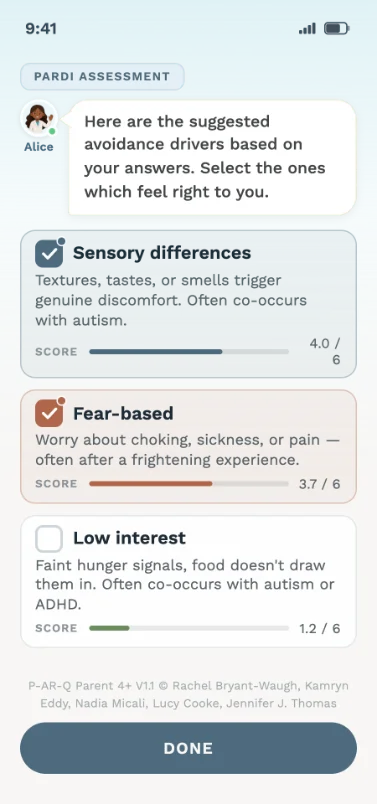
Screenshot: needs-based assessment

Needs-based assessment

Pinpoints what drives avoidance — sensory, fear, low interest, or a mix of all three.
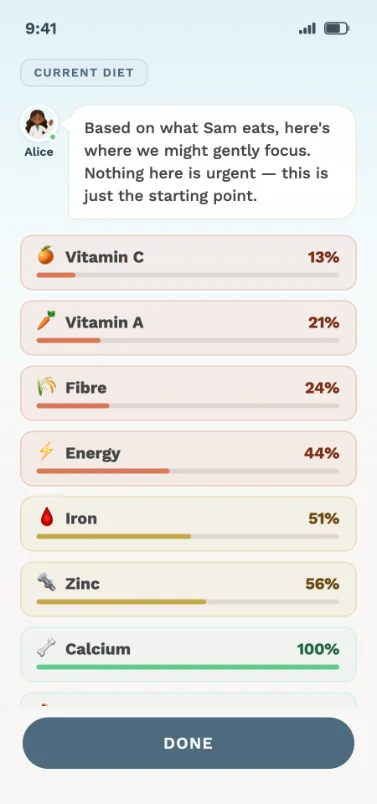
Screenshot: nutritional picture

Nutritional picture

Nutritional profile helping you understand any gaps to guide which foods to introduce.
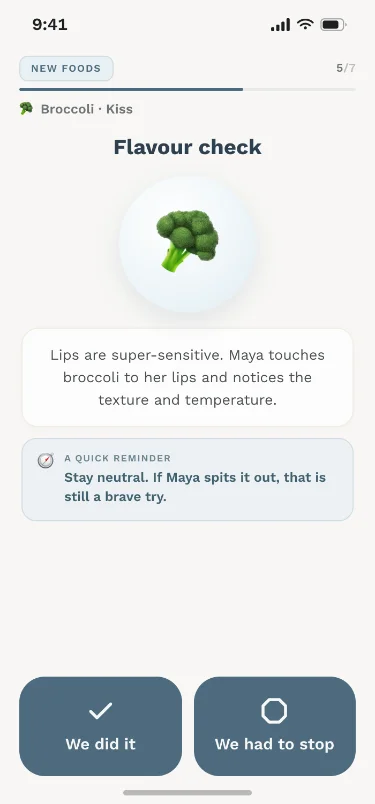
Screenshot: food-exposure engine

Food-exposure engine

Playful experiments that adapt to your family's pace, week by week.
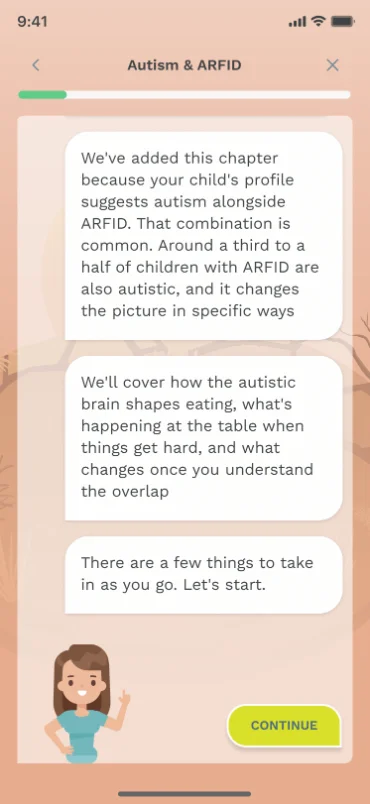
Screenshot: 10 week programme

10 week programme

Week by week new modules helping you gain new skills and knowledge to support your child.

A few of the things you'll find inside. Behind them sit dozens of modules and videos from families who’ve been there, and other tools to help you and your child.

Built around your child. Led by you.

A carer-led programme — because the person best placed to change a child's eating world is the one already at their table. You don't need your child to sign up. The core runs 10 weeks, then adapts to your pace.

A needs-based assessment first

PARDI-AR-Q, a structured ARFID interview, pinpoints what drives your child's avoidance — sensory, fear, low interest, or a mix.

A food-exposure engine

Playful, game-like experiments matched to your child's profile, one small step at a time. Pressure is banned; a nutrition picture updates as new foods come in.

Adapted for autism & ADHD

Modules adjust to your child's neurodevelopmental profile — because strategies for a neurotypical child can backfire for an autistic one.

Carer skills throughout

The New Maudsley approach, translated for ARFID mealtimes: lowering anxiety, avoiding the pressure trap, and protecting your own reserves too.

See programme details and pricing

What progress looks like

Not a clean plate. Not overnight. Progress with ARFID looks like a new food touched, then licked, then tried. A calmer table. A birthday party attended. A child who trusts that no one will push.

Even the teeniest steps deserve celebration — and this programme is built to notice every one.

"

The app has helped in every aspect of life. You can focus on the app together during parts of the week that best fit in with his snack and meal routines.

— Mum of an autistic son with ARFID

You've spent years being told it's nothing. It's something — and there's help.

Start the programme today, or book a free 15-minute call with someone who won't say "just fussy". Your child's world can get wider. Small steps, together.

Is this right for me?

Answer one question: what are you facing right now?

Our child avoids so many foods, and it's not about weight — ARFID, or something like it
ARFID care programme →

This programme is not yet available to buy.

We've seen a change — meals skipped, foods cut out, worries about weight or body — but there's no diagnosis
Our child has anorexia
Anorexia care programme →
Our loved one (over 18) is coming home after hospital
Returning home programme →

Still unsure? Book a free 15-minute call and we'll help you choose.

Questions families ask

Do we need a diagnosis to start?
No. The programme supports children with a formal ARFID diagnosis and children with ARFID-like eating difficulties. The needs-based assessment at the start meets your child where they are.
My child is autistic. Will this fit them?
Yes. The programme was designed with autistic children and children with ADHD in mind from the beginning, not adapted as an afterthought.
Should we still see our GP?
Yes — especially if your child is losing weight, not growing as expected, or very restricted in what they eat. Nutritional deficiencies need medical eyes. Univa works alongside your GP, not instead of them.
What does it cost?
The ARFID programme is £35 per month. If an NHS healthcare professional registered you and you've received a Univa welcome email or text, it's free — your programme is already funded.
More on ARFID: ARFID Awareness UK & Beat (0808 801 0677). Urgent medical help? Call 999 or go to A&E.
For more information and support with ARFID, visit ARFID Awareness UK or Beat (helpline 0808 801 0677). If your child needs urgent medical help, call 999 or go to A&E.
Book a free 15-minute call

A private, no-obligation chat with someone from our family support team. No diagnosis, referral or waiting list needed.

A private, no-obligation chat with someone from our family support team. No diagnosis, referral or waiting list needed.

WHO ARE YOU WORRIED ABOUT?
WHEN SUITS YOU FOR A CALL?
We use these details only to arrange your call.

Your call is booked in

Someone from our family support team will email you within one working day with times that match. Nothing to prepare — just come as you are.

If things feel urgent tonight, call 999 or Beat on 0808 801 0677.